
Transport
Road or trailer: how the car actually gets to the field
The first real decision of a show entry is made weeks before the day, and it changes the cost, the risk and the preparation that follows it.
Published 18 May 2026 · Updated 13 October 2026
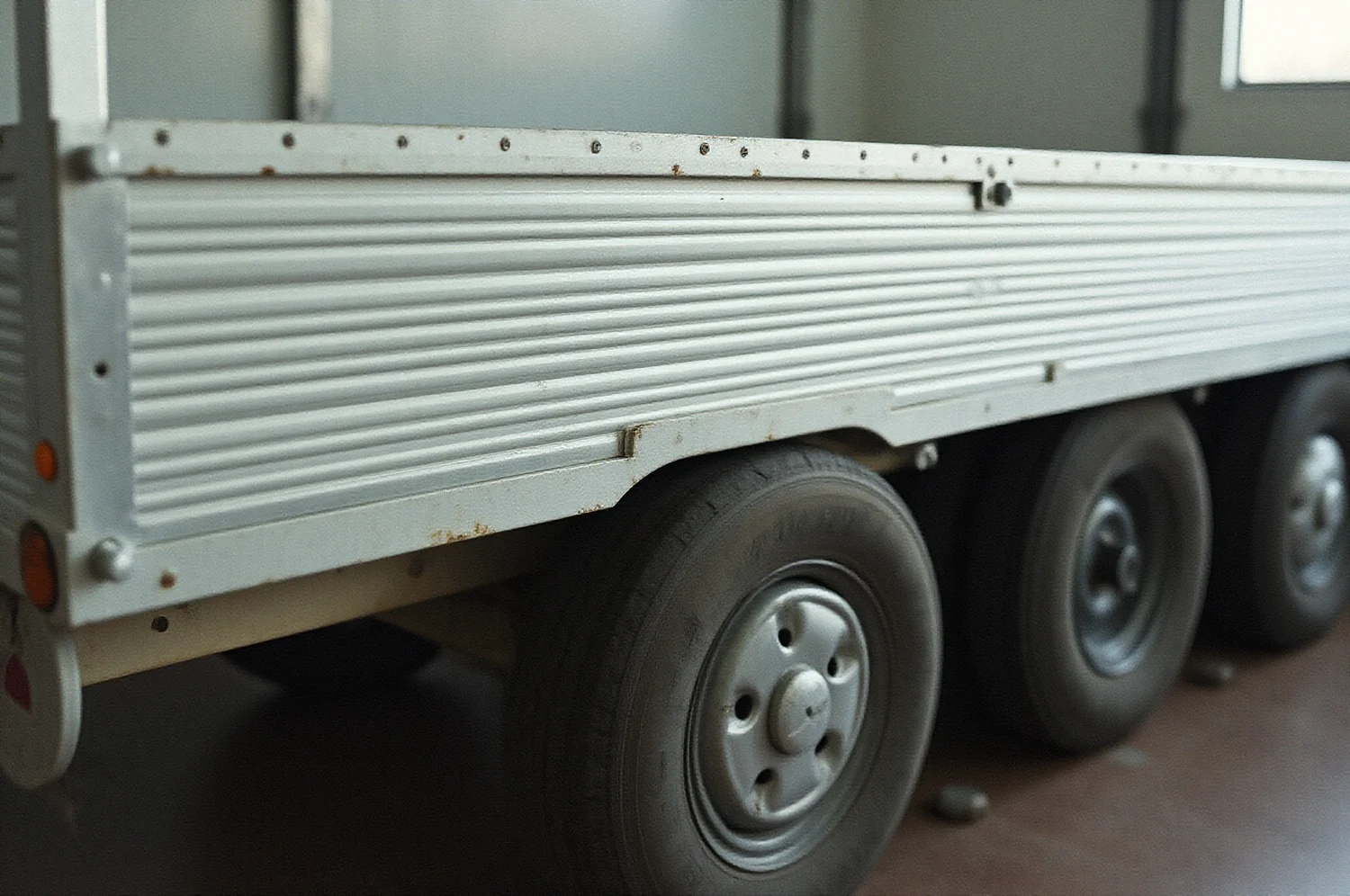
What the road actually asks of the car
A summer show run is not the same duty cycle as a Sunday drive. It is often a long steady load in warm weather, sometimes with a queue at the end of it, and it exposes cooling, charging and fuel delivery in a way that short local trips never do.
Cars that have been recommissioned rather than driven regularly are the ones that find this out the hard way. A vehicle that has covered two hundred kilometres in the previous six months is being asked to do that in one morning.
None of this argues against driving. It argues for driving the route in advance, or at least driving something like it, before the day that matters.
What trailering asks of you instead
Towing moves the risk from the car to the process. The vehicle arrives in the state it left in, and everything that can go wrong is about securing, loading and space.
The practical questions are ordinary and easy to underestimate: whether the tow vehicle is rated for the combined weight, whether the trailer's tyres and lights have been looked at this year, and where the trailer goes once it is empty. Some venues have a designated field for that, some do not.
There is also the matter of unloading alone. A car that goes on with two people helping can be awkward to take off without them.
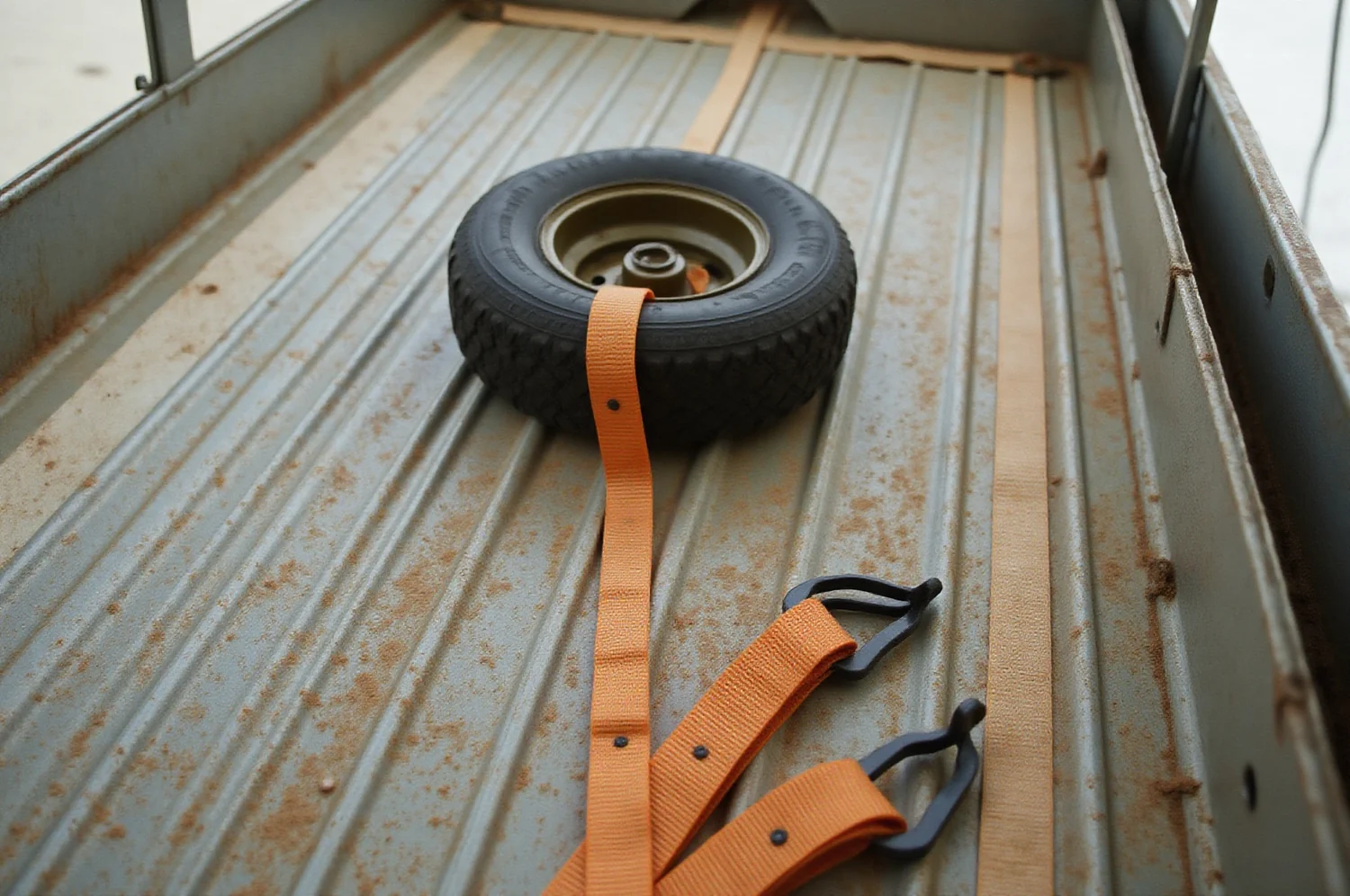
Securing a car properly
Straps go to the wheels or to designated points, not to suspension arms or bodywork. Wheel straps hold the tyre against the deck and let the suspension work; chassis straps compress the suspension and change how the car sits over bumps.
Four points, checked once at the start and again after the first few kilometres, is the ordinary standard. Straps settle as the car finds its position, and the tension that felt right in the yard is not always the tension twenty minutes later.
Handbrake on, in gear where the car allows it, and something under a wheel while the straps go on.
The compromise most owners settle on
Tow the motorway, drive the last stretch. It removes the long thermal load and the traffic, but the car still arrives under its own power, which matters at events where cars are asked to drive to their pitch rather than be pushed there.
It also means the engine is warm and the brakes have been used before the car is asked to manoeuvre in a field full of people.
The main cost is logistics: somewhere sensible to unload within a few kilometres of the venue, which usually means a phone call to the organiser rather than an assumption.
Insurance while the car is on a trailer
Cover for a vehicle being transported is not automatic and is not always where owners expect it to be. Some classic policies extend to it, some do not, and in some cases the relevant cover sits with the trailer or the tow vehicle rather than with the car.
This is worth a direct question to the insurer, in writing, before the first tow rather than after an incident. The answer is usually straightforward; the assumption is what causes trouble.
The same applies to a car left on a trailer overnight in a hotel car park, which is a different situation again.
What to check the night before either way
Fluids, tyre pressures including the spare, lights, and that the fuel in the tank is fresh enough for the distance. Fuel that has sat since last autumn behaves differently.
Documents in one folder, not spread between the car, the house and a phone.
And the boring one: that the car starts from cold, at the time of day you will actually be leaving, on the morning before.
Arriving
Most events want cars in early and then closed to movement for the day. Arriving late is not simply inconvenient; at many venues it means being parked outside the display area entirely.
Have the entry confirmation to hand rather than in a folder in the boot. Gate stewards are usually working from a list and a queue.
Once parked, the car generally stays until the published finishing time. That is a condition of most entries, not a suggestion.
General guidance only. Anything touching cover, roadworthiness or the conditions of a particular event belongs with your insurer, the tester or the organiser.