
Entries
Club stands: who allocates the space and what comes with it
The difference between an individual entry and a place on a club stand is not really about location. It is about who you have an agreement with.
Published 6 July 2026 · Updated 13 October 2026

Two different agreements
An individual entry is a contract between the owner and the event. The organiser decides where the car goes, usually by class or by arrival, and the conditions are the event's published ones.
A club stand is space the club has booked. The club decides who stands on it and where, and the conditions that matter day to day are the club's, not the organiser's.
Owners sometimes discover this at the point where the two sets of conditions disagree — for example about when a car may leave.
How pitches are usually allocated
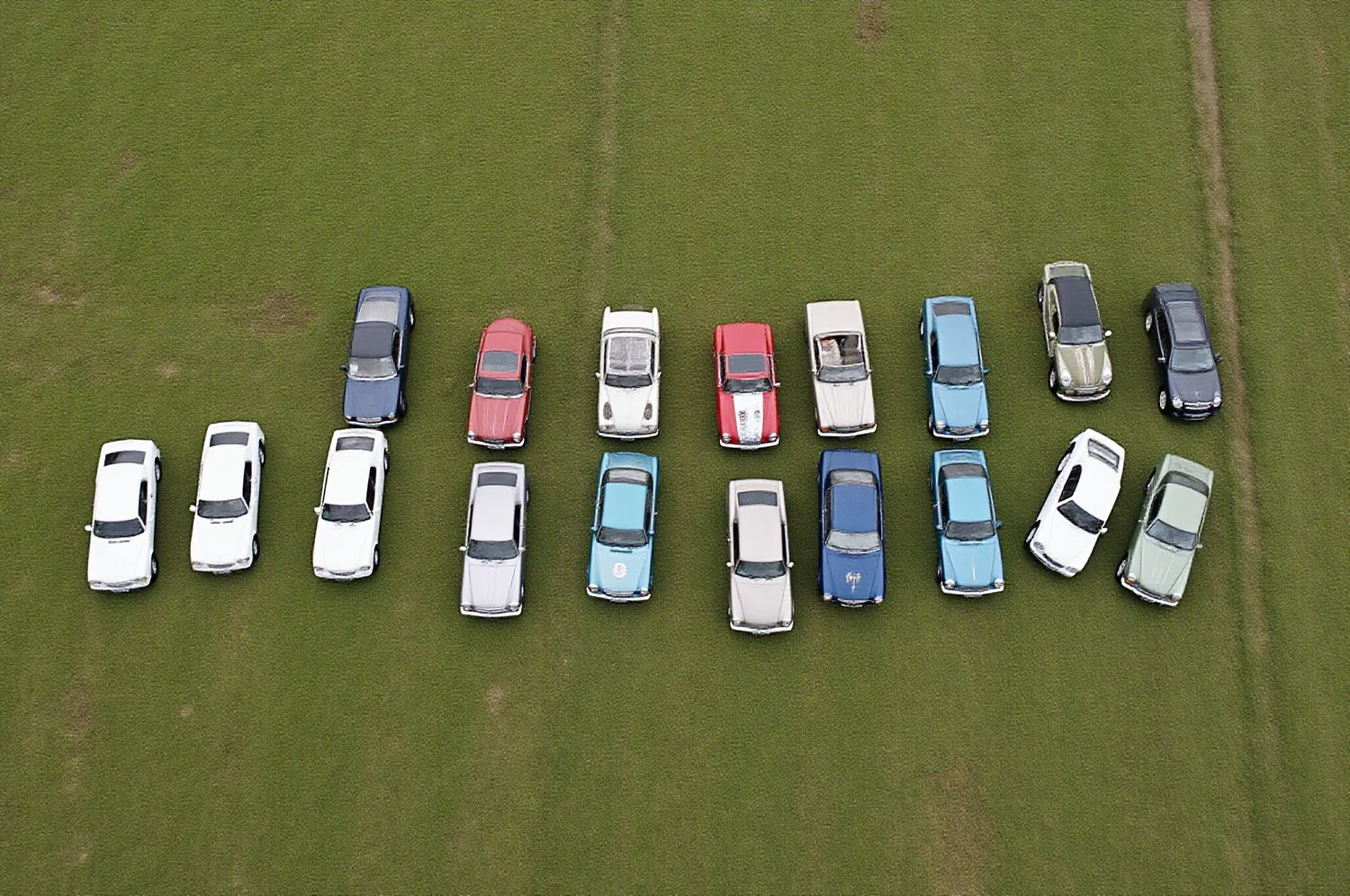
Most clubs allocate by a mixture of membership standing, how early someone asked, and what will make the stand look coherent. That last one is not favouritism; a stand is a display and clubs think about it as one.
For popular events the internal list often closes before the public entry does, which is why the answer to 'can I still get on the stand' is frequently no by the time an owner thinks to ask.
Some clubs run a rotation for the front row. Some do not have a front row in any meaningful sense.

What comes with a pitch
Usually: better placement, shared cover, someone to keep an eye on the car, and other people who know what your car is.
Often: a shared gazebo, tables, a club banner, and an expectation that you will help put them up and take them down.
Sometimes: passes, parking for the tow vehicle, and a place in a club parade if the event runs one.
What is expected in return
Arrival within a window, usually earlier than the general entry, because the stand has to be set out as a whole.
Staying until the published close. This is the condition that causes the most friction, and it is nearly always non-negotiable, because a gap in a stand at three in the afternoon looks like what it is.
A share of the setting up and clearing away, and a level of presentation consistent with the rest of the stand.
When an individual entry suits better
When you cannot commit to the full day, or when you need to leave early for reasons that will not change.
When the car does not fit the club's theme for that event, which happens more often than people expect and is not a judgement on the car.
When you would rather not spend the day in a group. That is a perfectly ordinary preference and no club minds it being said plainly.
Asking to join a stand
Ask early, ask the person who actually runs the stand rather than the club generally, and say what you have and what you can commit to.
Be specific about the car: model, year, condition and whether it is running. Stand organisers are arranging a picture and need to know what they are placing.
If the answer is no for a particular event, it is usually about space rather than about you, and asking again for the next one is normal.
If you are the one organising it
Publish the arrival window, the leaving time and the setting-up expectation in writing before you take names. Almost every dispute on a stand comes from one of those three being assumed.
Confirm places rather than leaving them implied, and confirm them again the week before.
Keep one space in reserve. Something always changes in the last fortnight.
General guidance only. Anything touching cover, roadworthiness or the conditions of a particular event belongs with your insurer, the tester or the organiser.